
Jeff Bezos & Project Prometheus

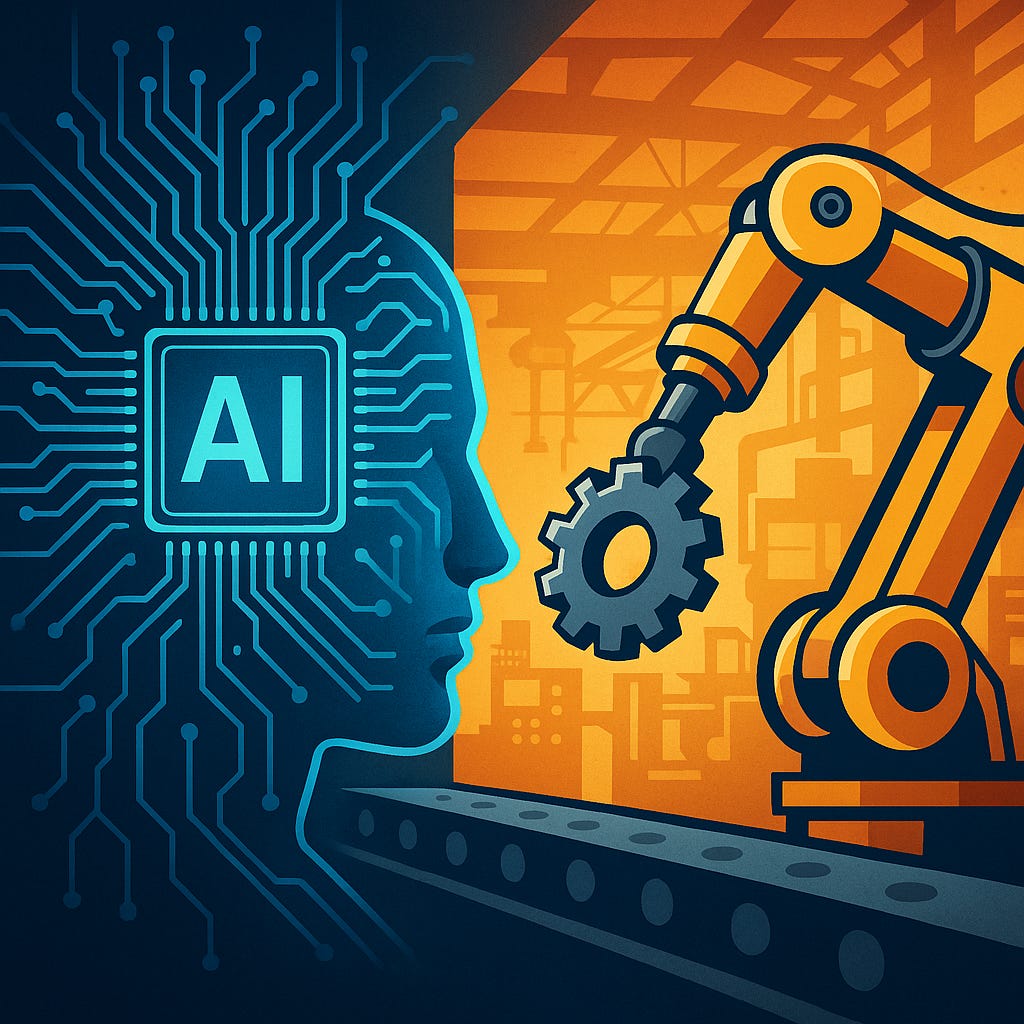
News surfaced recently of Jeff Bezos backing a stealth-mode AI venture called Project Prometheus, a name drawn from the Titan who delivered fire to humanity and forever altered the trajectory of human capability. It’s an evocative title, and probably intentional, because this project is not aimed at consumer chatbots or entertainment apps. Its early signals point to something far more structural: the practical application of artificial intelligence to manufacturing and engineering across computing, automotive, and aerospace sectors. In other words, Prometheus is targeting the places where things are actually designed, built, optimized, and delivered.
Although details remain tightly controlled, the theme is becoming clear. For decades, AI advanced mostly in software. Now the frontier has shifted toward what people are calling “physical AI,” or the marriage of machine learning with the hard realities of fabrication, logistics, and industrial engineering. A system that can understand tolerances, materials science, factory constraints, and multi-step production processes is not just another digital assistant. It is a capability that changes how entire industries operate. If Prometheus succeeds, the leap may resemble what CAD did to drafting, what robots did to assembly lines, or what cloud computing did to IT and potentially all at once.
Bezos’ interest in this kind of project shouldn’t surprise anyone who has followed his career. He has always positioned himself at the intersection of software, logistics, and physical infrastructure. Amazon’s competitive advantage wasn’t just selling books online; it was the creation of a global fulfillment and delivery network that married software intelligence with warehouses, transportation fleets, and automated sorting systems. Bezos understands deeply that the next breakthroughs will come from compressing the time and cost between imagination and physical reality. For him, Prometheus is not merely an investment in AI; it is an investment in accelerating invention itself.
It also aligns naturally with his ambitions in aerospace. Blue Origin is ultimately a manufacturing company disguised as a space company. Rockets are built, engines are tested, materials are stressed, and everything depends on systems that must be iterated rapidly and precisely. The idea of an AI engine that can redesign components, simulate loads, generate manufacturable geometries, validate tolerances, and optimize production cycles is a strategic necessity. If Prometheus helps close the loop between design and production, it could shorten R&D timelines in ways that alter the competitive landscape of aerospace.
There is also a more personal motivation behind ventures like this. Bezos has always been candid about pursuing projects with long-term civilizational impact. He funded the 10,000-year clock for the same symbolic reason Prometheus is named after fire: he wants to push humanity forward through tools that endure. AI applied to manufacturing is not a short-term consumer trend. It is infrastructure for the next century, the invisible machinery that determines how fast we can build, repair, scale, and explore. If the 20th century was defined by mass production, the 21st will be defined by the intelligent production they invent.
Finally, there is a competitive dimension. If the next industrial revolution is built on AI that understands the physical world, whoever controls that capability will shape global supply chains, national defense capacity, and technological leadership. Tech giants have already poured billions into models that process language and images. The next contest will unfold in factories, labs, shipyards, and launch sites. Bezos knows that the company which masters AI for engineering will hold an outsized position in the emerging economy, a position Amazon, for all its scale, does not currently dominate. Prometheus may be a way for him to place a marker on that future.
So while the project is still cloaked in secrecy, its direction seems unmistakable. Bezos is betting on AI not as a novelty, but as something elemental that expands what humanity can build, like Fire once was to the caveman. If the name is any indication, Prometheus is meant to be more than a business. It is meant to be a catalyst, a tool that compresses the distance between idea and execution and perhaps redefines what’s possible in the worlds of manufacturing and aerospace. Bezos has always played the long game, and this may be one of his most ambitious plays yet.